The University of Minnesota Humphrey School's Center on Women and Public Policy, in partnership with the Women's Foundation of Minnesota, just released
Status of Women & Girls in Minnesota: Research Overview (February 2012).
This report states that, in all areas, "Minnesota women and girls continue to face disparate outcomes in comparison to men and boys in multiple measures of economics, safety, health, and leadership". The disparities are even greater for Minnesota women of color, rural women, lesbian, bisexual, and transwomen, and women with disabilities.
If you want to find more information about the status of women in Minnesota, check out Gender Equality Explorer to create your own tables, maps, and reports to understand the status of women and girls in your community.
Showing posts with label women. Show all posts
Showing posts with label women. Show all posts
Friday, March 9, 2012


Wednesday, March 7, 2012
Rural Women's Health The Focus of International Women's Day
While the World Health Organization and the Gates Foundation focus on the health issues of rural women in the developing world, no one is paying attention to health issues of rural women in the United States.
According to the Rural Assistance Center, rural women in the United States, particularly women in persistent poverty areas (including Northern Plains states), receive delayed prenatal care, or none at all. Infant mortality rates in rural areas of the United States also remain higher than in metropolitan areas. The odds for infant mortality increase when rural women are more likely to bear children before their 20th birthday, or after their 40th. The prevalence of chronic illness and depression is also higher among rural women in the United States.
The American Congress of Obstetricians and Gynecologists has listed some recommendations to improve gynecological, prenatal, and obstetric care to rural women in the United States,
According to the Rural Assistance Center, rural women in the United States, particularly women in persistent poverty areas (including Northern Plains states), receive delayed prenatal care, or none at all. Infant mortality rates in rural areas of the United States also remain higher than in metropolitan areas. The odds for infant mortality increase when rural women are more likely to bear children before their 20th birthday, or after their 40th. The prevalence of chronic illness and depression is also higher among rural women in the United States.
The American Congress of Obstetricians and Gynecologists has listed some recommendations to improve gynecological, prenatal, and obstetric care to rural women in the United States,
Sunday, March 4, 2012
Women's History Month
Even though more women live on Earth than men, history books and Social Studies classes had often ignored female contributions to civilization.
In 1978, the Education Task Force of the Sonoma County Commission on the Status of Women initiated a "Women's History Week" celebration. It would begin on March 8th, International Women's Day. Dozens of schools participated in Women's History Week, and over one hundred women gave presentations in classrooms across the United States. The week included a "Real Woman" essay contest, and ended with a celebratory parade in Santa Rosa, California.
 In 1979, Women's History Week organizer Molly Murphy MacGregor was invited to participate in the Women's History Institute at Sarah Lawrence College. She shared the success of Sonoma County's Women's History Week with institute participants; the Women's History Institute decided to seek national support for a National Women's History Week.
In 1980, President Carter issued the first Presidential Proclamation declaring the Week of March 8th 1980 as National Women's History Week. In the same year, House Representative Barbara Mikulski and Senator Orrin Hatch co-sponsored a Congressional Resolution for National Women's History Week in 1981. State departments of education in Maryland, Pennsylvania, New York, Oregon, Alaska, and other states developed and distributed curriculum materials for all of their public schools. Organizations sponsored essay contests and other special programs in their local areas. Within a few years, thousands of schools and communities were celebrating National Women's History Week, supported and encouraged by resolutions from governors, city councils, school boards, and the U.S. Congress. By 1986, 14 states had already declared March as Women's History Month. In 1987, Congress declared March forever as National Women's History Month.

The Minnesota Department of Human Rights features some Minnesotan women's rights activists, as well as women's history resources.
For resources to celebrate Women's History Month, please consult the National Women's History Project website. They also published President Carter's Presidential Message declaring the first Women's History Week:
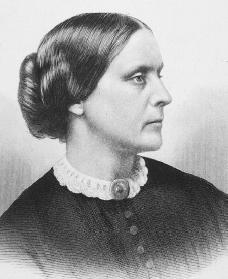 "From the first settlers who came to our shores, from the first American Indian families who befriended them, men and women have worked together to build this nation. Too often the women were unsung and sometimes their contributions went unnoticed. But the achievements, leadership, courage, strength and love of the women who built America was as vital as that of the men whose names we know so well.
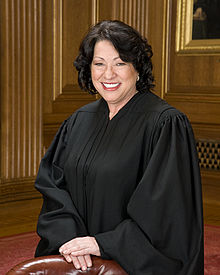 I ask my fellow Americans to recognize this heritage with appropriate activities during National Women’s History Week, March 2-8, 1980.
In 1978, the Education Task Force of the Sonoma County Commission on the Status of Women initiated a "Women's History Week" celebration. It would begin on March 8th, International Women's Day. Dozens of schools participated in Women's History Week, and over one hundred women gave presentations in classrooms across the United States. The week included a "Real Woman" essay contest, and ended with a celebratory parade in Santa Rosa, California.
In 1979, Women's History Week organizer Molly Murphy MacGregor was invited to participate in the Women's History Institute at Sarah Lawrence College. She shared the success of Sonoma County's Women's History Week with institute participants; the Women's History Institute decided to seek national support for a National Women's History Week.In 1980, President Carter issued the first Presidential Proclamation declaring the Week of March 8th 1980 as National Women's History Week. In the same year, House Representative Barbara Mikulski and Senator Orrin Hatch co-sponsored a Congressional Resolution for National Women's History Week in 1981. State departments of education in Maryland, Pennsylvania, New York, Oregon, Alaska, and other states developed and distributed curriculum materials for all of their public schools. Organizations sponsored essay contests and other special programs in their local areas. Within a few years, thousands of schools and communities were celebrating National Women's History Week, supported and encouraged by resolutions from governors, city councils, school boards, and the U.S. Congress. By 1986, 14 states had already declared March as Women's History Month. In 1987, Congress declared March forever as National Women's History Month.

The Minnesota Department of Human Rights features some Minnesotan women's rights activists, as well as women's history resources.
For resources to celebrate Women's History Month, please consult the National Women's History Project website. They also published President Carter's Presidential Message declaring the first Women's History Week:
"From the first settlers who came to our shores, from the first American Indian families who befriended them, men and women have worked together to build this nation. Too often the women were unsung and sometimes their contributions went unnoticed. But the achievements, leadership, courage, strength and love of the women who built America was as vital as that of the men whose names we know so well.As Dr. Gerda Lerner has noted, “Women’s History is Women’s Right.” – It is an essential and indispensable heritage from which we can draw pride, comfort, courage, and long-range vision.”
I ask my fellow Americans to recognize this heritage with appropriate activities during National Women’s History Week, March 2-8, 1980. I urge libraries, schools, and community organizations to focus their observances on the leaders who struggled for equality - - Susan B. Anthony, Sojourner Truth, Lucy
Stone, Lucretia Mott, Elizabeth Cady Stanton, Harriet Tubman, and Alice Paul.
Understanding the true history of our country will help us to comprehend the need for full equality under the law for all our people.
Stone, Lucretia Mott, Elizabeth Cady Stanton, Harriet Tubman, and Alice Paul.
Understanding the true history of our country will help us to comprehend the need for full equality under the law for all our people.
This goal can be achieved by ratifying the 27th Amendment to the United States Constitution, which states that “Equality of Rights under the Law shall not be denied or abridged by the United States or by any state on account of sex.”
Thursday, December 15, 2011
"Ask a Somali"
 The Twin Cities Daily Planet has a column called "Ask a Somali", written by Ifrah Jimale. Ms. Jimale answers all kinds of questions about Somali customs--many that people would be afraid to ask someone face to face. Her responses, whether serious or snarky, give non-Somalis an accessible, light-hearted starting point to gather some knowledge about Somali culture.
 Ifrah Jimale's column appears in two Somali-American publications, and is often cited in the blogs of others. When she is not writing, she works at a Caribou Coffee, does speaking gigs, and volunteers her time for many causes.
Subscribe to:
Posts (Atom)