While the World Health Organization and the Gates Foundation focus on the health issues of rural women in the developing world, no one is paying attention to health issues of rural women in the United States.
According to the Rural Assistance Center, rural women in the United States, particularly women in persistent poverty areas (including Northern Plains states), receive delayed prenatal care, or none at all. Infant mortality rates in rural areas of the United States also remain higher than in metropolitan areas. The odds for infant mortality increase when rural women are more likely to bear children before their 20th birthday, or after their 40th. The prevalence of chronic illness and depression is also higher among rural women in the United States.
The American Congress of Obstetricians and Gynecologists has listed some recommendations to improve gynecological, prenatal, and obstetric care to rural women in the United States,
Wednesday, March 7, 2012


Monday, March 5, 2012
Obama's Indonesian Nanny
Today Yahoo! News published a story about Obama's nanny who took care of him as a young boy growing up in Indonesia...here is the headline:
AP Exclusive: Obama's transgender ex-nanny outcast
The writer of this article, it seems, almost wants to put the blame on Obama for reasons why his former nanny is living in misery. Will people not vote for Obama, and vote for someone else, based on the current living conditions of his former nanny? Or will people read this article properly, and note that the writer depicts the average conditions of a poor transwoman in Indonesia? Will people read this article, and wonder if it is as bad as this for American transpeople--especially the poor and uneducated? Will people read this article, and demand that Muslim countries treat their queer populations with dignity and respect?
Will Oprah Winfrey rescue poor Evie? What about Ellen DeGeneres? What about a transgender rights group? How many people rescued the former slave nannies of previous presidents, and would they have done so if their stories had been made public?
Sunday, March 4, 2012
Women's History Month
Even though more women live on Earth than men, history books and Social Studies classes had often ignored female contributions to civilization.
In 1978, the Education Task Force of the Sonoma County Commission on the Status of Women initiated a "Women's History Week" celebration. It would begin on March 8th, International Women's Day. Dozens of schools participated in Women's History Week, and over one hundred women gave presentations in classrooms across the United States. The week included a "Real Woman" essay contest, and ended with a celebratory parade in Santa Rosa, California.
 In 1979, Women's History Week organizer Molly Murphy MacGregor was invited to participate in the Women's History Institute at Sarah Lawrence College. She shared the success of Sonoma County's Women's History Week with institute participants; the Women's History Institute decided to seek national support for a National Women's History Week.
In 1980, President Carter issued the first Presidential Proclamation declaring the Week of March 8th 1980 as National Women's History Week. In the same year, House Representative Barbara Mikulski and Senator Orrin Hatch co-sponsored a Congressional Resolution for National Women's History Week in 1981. State departments of education in Maryland, Pennsylvania, New York, Oregon, Alaska, and other states developed and distributed curriculum materials for all of their public schools. Organizations sponsored essay contests and other special programs in their local areas. Within a few years, thousands of schools and communities were celebrating National Women's History Week, supported and encouraged by resolutions from governors, city councils, school boards, and the U.S. Congress. By 1986, 14 states had already declared March as Women's History Month. In 1987, Congress declared March forever as National Women's History Month.

The Minnesota Department of Human Rights features some Minnesotan women's rights activists, as well as women's history resources.
For resources to celebrate Women's History Month, please consult the National Women's History Project website. They also published President Carter's Presidential Message declaring the first Women's History Week:
 "From the first settlers who came to our shores, from the first American Indian families who befriended them, men and women have worked together to build this nation. Too often the women were unsung and sometimes their contributions went unnoticed. But the achievements, leadership, courage, strength and love of the women who built America was as vital as that of the men whose names we know so well.
 I ask my fellow Americans to recognize this heritage with appropriate activities during National Women’s History Week, March 2-8, 1980.
In 1978, the Education Task Force of the Sonoma County Commission on the Status of Women initiated a "Women's History Week" celebration. It would begin on March 8th, International Women's Day. Dozens of schools participated in Women's History Week, and over one hundred women gave presentations in classrooms across the United States. The week included a "Real Woman" essay contest, and ended with a celebratory parade in Santa Rosa, California.
In 1979, Women's History Week organizer Molly Murphy MacGregor was invited to participate in the Women's History Institute at Sarah Lawrence College. She shared the success of Sonoma County's Women's History Week with institute participants; the Women's History Institute decided to seek national support for a National Women's History Week.In 1980, President Carter issued the first Presidential Proclamation declaring the Week of March 8th 1980 as National Women's History Week. In the same year, House Representative Barbara Mikulski and Senator Orrin Hatch co-sponsored a Congressional Resolution for National Women's History Week in 1981. State departments of education in Maryland, Pennsylvania, New York, Oregon, Alaska, and other states developed and distributed curriculum materials for all of their public schools. Organizations sponsored essay contests and other special programs in their local areas. Within a few years, thousands of schools and communities were celebrating National Women's History Week, supported and encouraged by resolutions from governors, city councils, school boards, and the U.S. Congress. By 1986, 14 states had already declared March as Women's History Month. In 1987, Congress declared March forever as National Women's History Month.

The Minnesota Department of Human Rights features some Minnesotan women's rights activists, as well as women's history resources.
For resources to celebrate Women's History Month, please consult the National Women's History Project website. They also published President Carter's Presidential Message declaring the first Women's History Week:
"From the first settlers who came to our shores, from the first American Indian families who befriended them, men and women have worked together to build this nation. Too often the women were unsung and sometimes their contributions went unnoticed. But the achievements, leadership, courage, strength and love of the women who built America was as vital as that of the men whose names we know so well.As Dr. Gerda Lerner has noted, “Women’s History is Women’s Right.” – It is an essential and indispensable heritage from which we can draw pride, comfort, courage, and long-range vision.”
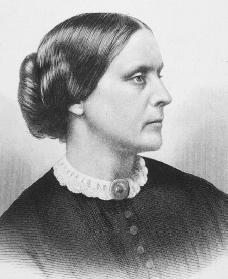
I ask my fellow Americans to recognize this heritage with appropriate activities during National Women’s History Week, March 2-8, 1980. I urge libraries, schools, and community organizations to focus their observances on the leaders who struggled for equality - - Susan B. Anthony, Sojourner Truth, Lucy
Stone, Lucretia Mott, Elizabeth Cady Stanton, Harriet Tubman, and Alice Paul.
Understanding the true history of our country will help us to comprehend the need for full equality under the law for all our people.
Stone, Lucretia Mott, Elizabeth Cady Stanton, Harriet Tubman, and Alice Paul.
Understanding the true history of our country will help us to comprehend the need for full equality under the law for all our people.
This goal can be achieved by ratifying the 27th Amendment to the United States Constitution, which states that “Equality of Rights under the Law shall not be denied or abridged by the United States or by any state on account of sex.”
Tuesday, February 28, 2012
BIG NEWS for the Saint Cloud Regional Human Rights Commission
If you would like to serve on the Saint Cloud Regional Human Rights Commission, neither gender nor residence will prevent you from serving.
The Saint Cloud Regional Human Rights Commission desperately needs members. The original guidelines restricted the number of people who could serve, as well as who could serve according to protected class status. While some people may not agree with the changes, the Commission cannot function without human beings of any race, religion, ethnicity, sexual orientation, gender identity, socioeconomic class, ability or disability, etc..
People in many regions of Central Minnesota experience human rights abuses, every day, and no one is speaking out for them. Gay boys are getting beat up in Milaca, immigrants are getting harassed in a church in Cold Spring, and the list goes on. The Human Rights Commission needs to hear your voice.
Monday, February 27, 2012
If Corporations Can Be Tried in Court as Individuals...
Then they can also be tried for human rights abuses and genocide. On February 28, the US Supreme Court will determine whether or not US and global corporations can be held liable for genocide and other violations of international law.
The court case--Kiobel v. Royal Dutch Petroleum (aka "Shell")--involves a class action lawsuit filed by the Ogoni people of southern Nigeria, who claim that Shell committed human rights abuses in cooperation with the Nigerian government to terrorize the Ogoni off of their land in the oil-rich Niger Delta.
Kudos to The Guardian for covering this story.
Saturday, February 25, 2012
The State of Bullying in Minnesota
Students have the right to receive an education in a safe environment. This is a human right.
According to the U.S. Department of Education, Minnesota receives the lowest marks for the lack of scope and definition in its state anti-bullying legislation.
Minnesota sets the record for the SHORTEST anti-bullying law in the nation--at 37 words. Here is the text:
According to the U.S. Department of Education, Minnesota receives the lowest marks for the lack of scope and definition in its state anti-bullying legislation.
Minnesota sets the record for the SHORTEST anti-bullying law in the nation--at 37 words. Here is the text:
121A.0695 SCHOOL BOARD POLICY; PROHIBITING INTIMIDATION AND BULLYING.
Each school board shall adopt a written policy prohibiting intimidation and bullying of any student. The policy shall address intimidation and bullying in all forms, including, but not limited to, electronic forms and forms involving Internet use.
History: 1Sp2005 c 5 art 2 s 28; 2007 c 53 s 1
This policy does not define bullying, nor does it state that the bullying policy must address protected classes defined by the Minnesota Human Rights Act.
To help address the issue, Governor Dayton has created the Task Force on the Prevention of School Bullying. Members of the task force and their affiliations include:
- Brenda Cassellius, Commissioner, Minnesota Department of Education
- Kevin Lindsey, Commissioner, Minnesota Department of Human Rights
- Willie Bridges, Senior Planning Manager, Hennepin County Attorney’s Office
- Vangie Castro, Youth Education Program Manager, Rochester Public Schools
- Phil Duran, Legal Director, OutFront Minnesota
- Alana Friedman, Teacher
- Julie Hertzog, Director, PACER National Bullying Prevention Center
- Lyn Mitchell, Co-Founder, AMAZE
- Jacob Reitan, Founder, Equality Ride
- Walter Roberts, Councilor, Minnesota State University, Mankato
- Dr. Thomas Scott, Pediatrician
- Senator Scott Dibble
- Representative Jim Davnie
- Two Republican legislators have been invited and are yet to be announced by leadership
Subscribe to:
Posts (Atom)